Caustic Soda (Sodium Hydroxide) – Industrial Uses & Grades
What Is Caustic Soda?
Caustic soda is the common name for sodium hydroxide (NaOH), a strong alkaline chemical widely used in manufacturing, water treatment, soap and detergent production, mining, textiles, pulp and paper, and many other industrial processes.
Caustic soda is valued for its ability to neutralize acids, break down fats and oils, regulate pH, and support numerous chemical reactions. It is commonly supplied as flakes, pearls, pellets, or liquid solutions depending on the application.
What Is Caustic Soda Made Of?
Caustic soda is sodium hydroxide, with the chemical formula NaOH. It consists of sodium, oxygen, and hydrogen.
Commercial sodium hydroxide is produced on a large industrial scale, primarily through the electrolysis of brine. The resulting chemical is then supplied in solid or liquid forms according to customer and manufacturing requirements.
What Does Caustic Soda Look Like?
The appearance depends on its physical form.
Solid caustic soda is generally available as:
- White flakes
- White pearls
- Pellets or granules
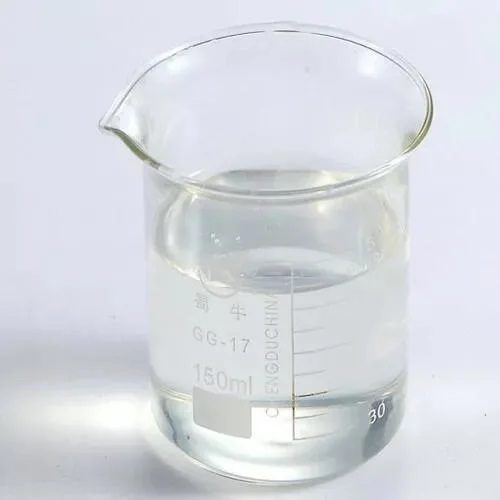
Liquid caustic soda is normally supplied as a clear, colorless sodium hydroxide solution.
Because sodium hydroxide readily absorbs moisture from the atmosphere, solid material should remain properly sealed during storage.

What Is Caustic Soda Used For?
After asking what caustic soda is, the next important question is what industries use it.
Sodium hydroxide is an important industrial chemical because of its strong alkalinity and versatility.
Soap and Detergent Manufacturing
Caustic soda plays a major role in soap manufacturing. It reacts with fats and oils during the saponification process to produce soap.
It is also used in:
- Industrial detergents
- Cleaning formulations
- Degreasers
- Chemical cleaning products
Water and Wastewater Treatment
Water treatment facilities use sodium hydroxide for:
- pH adjustment
- Acid neutralization
- Wastewater treatment
- Industrial effluent treatment
- Water conditioning
Its strong alkalinity makes it useful when acidic water or industrial wastewater requires controlled pH adjustment.
Pulp and Paper Manufacturing
The pulp and paper industry uses caustic soda during wood processing and pulp production.
It helps separate lignin from cellulose fibers and supports several cleaning and processing stages involved in paper manufacturing.
Textile Processing
Textile manufacturers use sodium hydroxide in processes such as:
- Cotton treatment
- Mercerization
- Dyeing preparation
- Fabric processing
- Industrial textile cleaning
Mercerization can improve cotton fiber strength, appearance, and dye absorption.
Mining and Mineral Processing
Caustic soda is also used in selected mining and metallurgical operations for:
- pH regulation
- Ore processing
- Mineral treatment
- Chemical extraction processes
- Equipment cleaning
The required concentration and grade depend on the specific mineral processing system.
Chemical Manufacturing
Sodium hydroxide is an important raw material and processing chemical used to manufacture many other products.
Applications include:
- pH control
- Chemical synthesis
- Acid neutralization
- Process cleaning
- Industrial chemical production
What Are the Different Grades of Caustic Soda?
Caustic soda is available in several grades and forms. Buyers should select a product according to their manufacturing process and required specifications.
Industrial Grade Caustic Soda
Industrial-grade sodium hydroxide is commonly used in:
- Chemical manufacturing
- Mining
- Pulp and paper
- Textile processing
- Detergent manufacturing
- Industrial cleaning
Caustic Soda Flakes
Caustic soda flakes are one of the most widely traded solid forms of sodium hydroxide.
They provide convenient storage and transportation for manufacturers that prepare sodium hydroxide solutions on site.

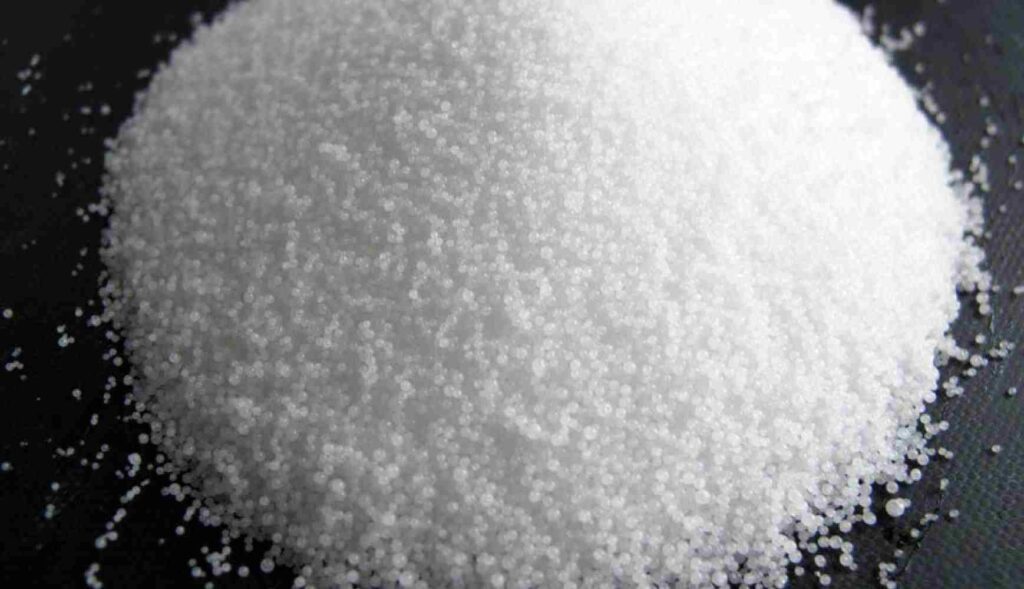
Caustic Soda Pearls
Caustic soda pearls are small, uniform solid particles. Their consistent shape can make weighing, handling, and controlled dissolution convenient for industrial users.
Liquid Caustic Soda
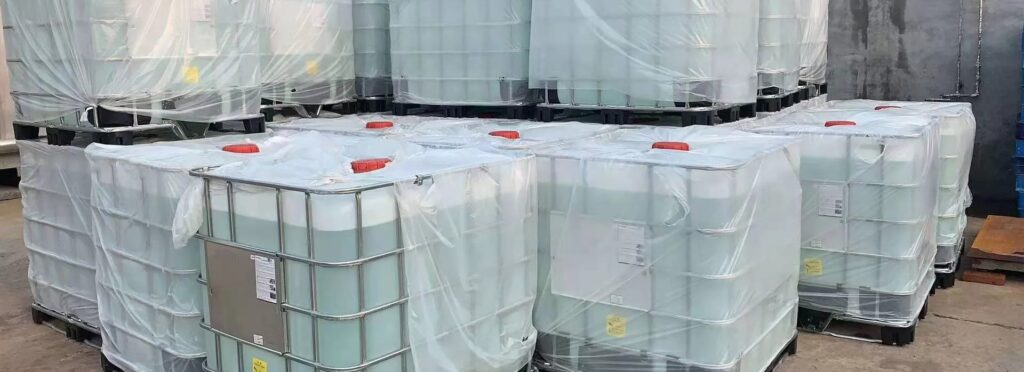
Liquid caustic soda is sodium hydroxide already dissolved in water at a specified concentration.
Large industrial facilities may choose a liquid supply when they require direct dosing into production or treatment systems.
Caustic Soda Specifications
Typical product characteristics include:
- Chemical Name: Sodium Hydroxide
- Common Name: Caustic Soda
- Chemical Formula: NaOH
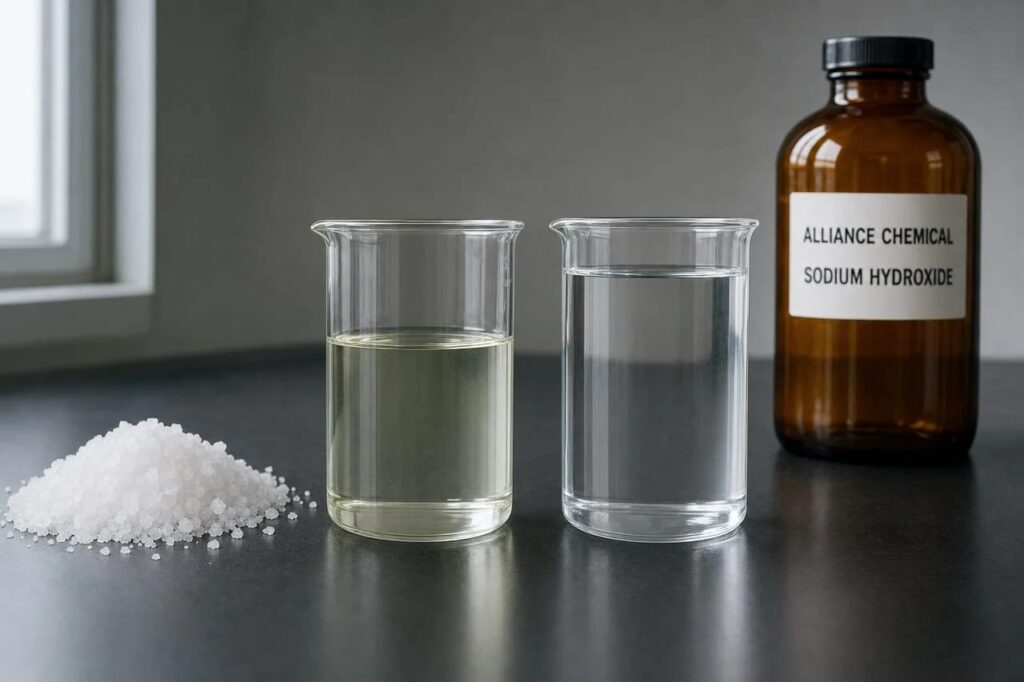
- Appearance: White flakes, pearls, or pellets; clear solution when liquid
- Chemical Type: Strong alkali
- Available Forms: Flakes, pearls, pellets, and liquid
- Grades: Industrial and other application-specific grades
Exact purity and specifications should always be confirmed through the relevant Certificate of Analysis (COA).
Caustic Soda Flakes vs Liquid Caustic Soda
Both products contain sodium hydroxide, but their physical forms affect transportation, storage, and use.
Caustic soda flakes are a concentrated solid material. They are convenient for storage and can be dissolved to prepare solutions at the required concentration.
Liquid caustic soda is supplied as an aqueous solution and may be more convenient for facilities with dedicated chemical storage and dosing equipment.
The right option depends on consumption volume, available infrastructure, transport requirements, and manufacturing processes.
Is Caustic Soda the Same as Sodium Hydroxide?
Yes. Caustic soda and sodium hydroxide refer to the same chemical compound, NaOH.
“Sodium hydroxide” is the chemical name, while “caustic soda” is the common commercial and industrial name.
Is Caustic Soda Dangerous?
Caustic soda is highly corrosive. Concentrated sodium hydroxide can cause severe chemical burns and serious eye damage.
Industrial users should follow the product-specific Safety Data Sheet (SDS), workplace procedures, applicable regulations, and professional chemical-handling requirements.
Workers should receive appropriate training before handling sodium hydroxide.
How Should Caustic Soda Be Stored?
Proper storage is essential because sodium hydroxide is corrosive and solid caustic soda readily absorbs moisture.
Industrial facilities should:
- Keep containers securely closed.
- Use compatible storage materials.
- Protect solid products from moisture.
- Follow the supplier’s SDS.
- Segregate the chemical from incompatible materials.
- Maintain appropriate spill and emergency procedures.
Storage requirements can differ according to product concentration, quantity, packaging, and local regulations.
Industries That Use Caustic Soda
Caustic soda has applications across many sectors, including:
- Soap and detergent manufacturing
- Water treatment
- Chemical manufacturing
- Mining and metallurgy
- Pulp and paper
- Textile manufacturing
- Industrial cleaning
- Petroleum processing
- Manufacturing and process industries
Its versatility explains why sodium hydroxide remains one of the world’s major industrial chemicals.
Frequently Asked Questions
What is caustic soda?
Caustic soda is the common industrial name for sodium hydroxide (NaOH), a strong alkaline chemical used in manufacturing, cleaning, water treatment, soap production, textiles, mining, and numerous other processes.
What is the chemical formula for caustic soda?
The chemical formula for caustic soda is NaOH.
Is caustic soda the same as sodium hydroxide?
Yes. Sodium hydroxide is the chemical name, while caustic soda is its widely used commercial name.
What is caustic soda used for?
Common uses include soap and detergent production, water treatment, pulp and paper manufacturing, textile processing, industrial cleaning, mining, and chemical manufacturing.
What forms of caustic soda are available?
Commercial caustic soda is commonly available as flakes, pearls, pellets, and liquid sodium hydroxide solutions.
Conclusion
So, what is caustic soda? It is sodium hydroxide (NaOH), a powerful alkaline chemical used across manufacturing, water treatment, soap production, textiles, mining, pulp and paper, and chemical processing.
Its ability to neutralize acids, regulate pH, process fats and oils, and support chemical reactions makes it an important raw material for many industries.
Companies sourcing caustic soda should select the appropriate grade, concentration, and physical form for their specific application while following applicable safety, storage, transportation, and handling requirements.