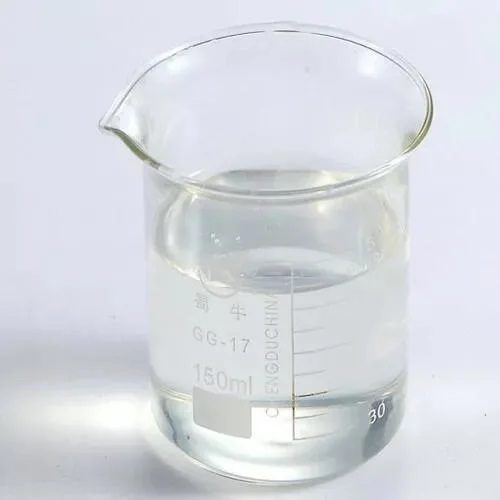
Polyaluminum Chloride (PAC): Uses and Applications
Polyaluminum chloride, commonly abbreviated as PAC, is an inorganic polymeric coagulant widely used in drinking water treatment, wastewater treatment, industrial effluent treatment, and other separation processes.
It helps remove suspended particles, turbidity, colour, and certain organic materials from water by destabilizing small particles and encouraging them to combine into larger flocs that can be removed through sedimentation or filtration.
PAC is also known as polyaluminium chloride, particularly in countries that use British English spelling.
Because of its efficient coagulation performance, polyaluminium chloride has become an important water treatment chemical for municipal and industrial treatment facilities.
What Is Polyaluminum Chloride?
Polyaluminum chloride is a family of pre-hydrolyzed aluminium salts containing aluminium, chloride, and hydroxide.
Unlike a simple aluminium salt, PAC contains polymerized aluminium species that provide effective charge neutralization during water treatment.
It is generally supplied as either:
- Liquid polyaluminum chloride
- Powder polyaluminum chloride
Different PAC products can have different aluminium content, basicity, purity, colour, and other specifications.
Therefore, treatment plants should select the appropriate PAC grade according to raw-water characteristics, treatment objectives, and applicable water-quality requirements.
Is Polyaluminum Chloride the Same as PAC?
Yes.
PAC is the common abbreviation for polyaluminum chloride or polyaluminium chloride.
Depending on the country or supplier, you may encounter several spellings and abbreviations, including:
- Polyaluminum chloride
- Poly aluminum chloride
- Polyaluminium chloride
- Poly aluminium chloride
- PAC
- PACl
These names generally refer to the same family of polymerized aluminium-based coagulants.
How Does Polyaluminum Chloride Work?
To understand why PAC is effective, it helps to understand the coagulation process.
Water can contain extremely small suspended and colloidal particles. Many of these particles carry negative surface charges that prevent them from naturally joining together and settling.
When an appropriate polyaluminum chloride coagulant is introduced into the treatment process, positively charged aluminium species help destabilize these negatively charged particles.
The treatment process generally involves:
- Coagulation – PAC destabilizes suspended and colloidal particles.
- Flocculation – Destabilized particles collide and form larger flocs.
- Sedimentation or flotation – The larger flocs can be separated from the water.
- Filtration – Remaining suspended material can be removed during subsequent treatment.
This coagulation and flocculation process can significantly improve water clarity.
Polyaluminum Chloride for Water Treatment
Water treatment is one of the most important applications of polyaluminum chloride.
PAC can be used as a primary coagulant in:
- Drinking water treatment
- Municipal water treatment
- Wastewater treatment
- Industrial wastewater treatment
- Process water treatment
- Effluent treatment
- Sludge treatment
Its primary role is to improve the removal of suspended and colloidal material from water.
PAC for Drinking Water Treatment
Drinking-water treatment plants may use suitable grades of polyaluminum chloride as a primary coagulant.
PAC can assist with the removal or reduction of:
- Turbidity
- Suspended particles
- Colour
- Natural organic matter
- Certain metals
- Other coagulation-removable impurities
The coagulated particles form flocs that can subsequently be separated through clarification and filtration.
Only PAC grades that meet applicable drinking-water standards and regulatory requirements should be used for potable water applications.
PAC for Wastewater Treatment
Another major application is municipal and industrial wastewater treatment.
Wastewater can contain suspended solids, colloids, colour, organic matter, and other contaminants that are difficult to remove through simple settling.
Polyaluminum chloride can improve solid-liquid separation by promoting the formation of larger, more settleable flocs.
Potential applications include:
- Municipal wastewater
- Industrial wastewater
- Process wastewater
- Textile wastewater
- Paper mill effluent
- Chemical industry wastewater
- Food-processing wastewater
- Other industrial effluent streams
The appropriate grade and treatment conditions depend on wastewater composition.
Polyaluminum Chloride in Industrial Water Treatment
Manufacturing plants often require treated water for production, cooling, processing, washing, and other operations.
PAC may be incorporated into industrial water-treatment systems to help control:
- Turbidity
- Suspended solids
- Colloidal particles
- Colour
- Selected organic matter
Effective pretreatment can also improve the performance of downstream clarification and filtration systems.
Polyaluminum Chloride in Textile Wastewater
Textile and dyeing facilities can generate wastewater containing colour, suspended solids, and complex contaminants.
PAC is commonly considered as part of a broader treatment process for:
- Coagulation
- Colour reduction
- Suspended-solids removal
- Effluent clarification
- Solid-liquid separation
The performance of PAC depends on wastewater chemistry and should be evaluated through appropriate treatment testing.
PAC in the Pulp and Paper Industry
The pulp and paper industry represents another important industrial application.
Polyaluminum chloride can be used in water and wastewater treatment associated with paper production.
Depending on the process, aluminium-based coagulants may support:
- Process-water clarification
- Wastewater treatment
- Suspended-solids removal
- Retention processes
- Drainage improvement
- Effluent treatment
The exact product specification should match the paper-manufacturing process and treatment objective.
Other Polyaluminum Chloride Uses
Although water and wastewater treatment are the primary applications, PAC-related products also have uses in several industrial sectors.
Applications can include:
- Paper manufacturing
- Textile processing
- Chemical manufacturing
- Industrial cleaning products
- Adhesives and binding applications
- Industrial separation processes
The required PAC specification can differ considerably between industries.
Benefits of Polyaluminum Chloride
PAC is widely used because properly selected products can offer several operational advantages.
Effective Coagulation
Polyaluminum chloride can efficiently destabilize fine suspended and colloidal particles, supporting improved clarification.
Strong Floc Formation
PAC can promote the formation of robust flocs that are easier to separate through sedimentation and filtration.
Broad Treatment Applications
It can be used across municipal water, wastewater, industrial water, and several manufacturing processes.
Effective Across Different Water Conditions
PAC can perform effectively across a useful range of treatment conditions. However, actual performance depends on raw-water chemistry and the PAC formulation selected.
Potentially Lower Chemical Requirements
For some water conditions, PAC can achieve the required coagulation performance at a lower dose than conventional alum.
Reduced Alkalinity Consumption
Because PAC is partially neutralized before application, it can consume less alkalinity than conventional aluminium sulfate under suitable treatment conditions.
This can reduce the amount of pH correction required in some treatment systems.
Polyaluminum Chloride vs Alum
Both polyaluminum chloride and aluminium sulfate (alum) are widely used coagulants, but they are chemically different.
| Feature | Polyaluminum Chloride | Aluminium Sulfate |
| Common abbreviation | PAC / PACl | Alum |
| Chemical type | Pre-hydrolyzed polymeric aluminium coagulant | Aluminium salt |
| Main application | Coagulation | Coagulation |
| Floc formation | Often rapid and robust | Effective but condition-dependent |
| Alkalinity consumption | Generally lower | Generally higher |
| pH impact | Often lower | Can reduce pH more significantly |
| Dosage | Can be lower in some applications | Depends on raw water |
| Sludge generation | Can be lower under suitable conditions | Can be higher |
Neither chemical is automatically the best choice for every treatment plant.
The appropriate coagulant should be selected based on raw-water quality, treatment objectives, operating conditions, cost, downstream processes, and laboratory or plant trials.
Polyaluminum Chloride vs Aluminum Chloride
Polyaluminum chloride should not be confused with aluminum chloride (AlCl₃).
PAC is a polymerized aluminium coagulant specifically formulated for applications such as water and wastewater treatment.
Aluminum chloride is a simpler aluminium salt used in several chemical and industrial processes.
Therefore, customers should verify the exact chemical required before purchasing.
Powder vs Liquid Polyaluminum Chloride
PAC is commercially available in both powder and liquid forms.
Powder Polyaluminum Chloride
Powder PAC offers advantages for transportation and storage, particularly when shipping long distances.
Before use, powder products generally require preparation according to the manufacturer’s technical instructions.
Liquid Polyaluminum Chloride
Liquid PAC is supplied ready for appropriate dosing systems and can be convenient for large treatment facilities with suitable bulk storage infrastructure.
The preferred form depends on:
- Treatment-plant size
- Consumption rate
- Storage facilities
- Transportation costs
- Dosing equipment
- Product specification
Understanding PAC Basicity
Basicity is an important specification when evaluating polyaluminum chloride.
In simplified terms, it describes the degree to which chloride in the aluminium salt has been replaced by hydroxide.
PAC products with different basicity levels can behave differently during coagulation.
Therefore, buyers should not select PAC based solely on product appearance or price.
Important parameters can include:
- Basicity
- Aluminium content
- Al₂O₃ content
- Insoluble matter
- pH
- Iron content
- Product form
- Intended application
Always review the manufacturer’s technical specification and Certificate of Analysis.
Selecting the Correct PAC Grade
There is no single polyaluminum chloride grade that is ideal for every application.
Selection should consider:
- Raw-water turbidity
- pH
- Alkalinity
- Temperature
- Natural organic matter
- Wastewater composition
- Treatment objective
- Downstream filtration
- Applicable regulations
For drinking-water applications, regulatory compliance and product certification are particularly important.
How Much Polyaluminum Chloride Should Be Used?
There is no universal PAC dosage suitable for every water-treatment system.
The required amount depends on factors such as:
- Raw-water quality
- Turbidity
- Organic load
- pH
- Alkalinity
- Temperature
- PAC grade and basicity
- Treatment objective
More PAC does not necessarily mean better treatment.
Excessive coagulant can reduce treatment efficiency and potentially create downstream water-quality problems.
Treatment facilities should determine the appropriate dosage through qualified water-treatment professionals, laboratory testing, jar testing, and plant-specific operating procedures.
Is Polyaluminum Chloride Safe for Drinking Water?
Appropriate grades of polyaluminum chloride are widely used in drinking-water treatment.
However, not every PAC product should automatically be considered suitable for potable water.
Drinking-water treatment chemicals should comply with applicable national standards, certifications, contaminant limits, and treatment requirements.
Operators should verify product specifications and regulatory suitability before use.
Storage and Handling
PAC should be stored and handled according to its specific product form and Safety Data Sheet.
General considerations include:
- Keep containers properly closed
- Protect powder products from moisture
- Use compatible storage materials
- Avoid contamination
- Follow workplace chemical-handling procedures
- Wear appropriate personal protective equipment
- Maintain suitable spill-control procedures
Storage requirements for liquid and powder PAC can differ.
Always follow the manufacturer’s SDS and applicable workplace regulations.
Frequently Asked Questions
What is polyaluminum chloride?
Polyaluminum chloride is an aluminium-based inorganic polymeric coagulant primarily used to remove suspended and colloidal impurities during water and wastewater treatment.
What does PAC stand for?
In this context, PAC stands for polyaluminum chloride or polyaluminium chloride.
It should not be confused with powdered activated carbon, which may also be abbreviated as PAC in the water-treatment industry.
What is polyaluminum chloride used for?
Its main applications include drinking-water treatment, municipal wastewater treatment, industrial wastewater treatment, process-water clarification, paper manufacturing, and textile effluent treatment.
How does PAC work in water treatment?
PAC destabilizes negatively charged suspended and colloidal particles. These particles then combine into larger flocs that can be removed through sedimentation, flotation, or filtration.
Is polyaluminum chloride the same as polyaluminium chloride?
Yes. Polyaluminum is primarily the American spelling, while polyaluminium follows British English conventions. Both terms refer to the same family of PAC chemicals.
Is PAC the same as alum?
No. PAC and aluminium sulfate (alum) are both aluminium-based coagulants, but their chemical structures and treatment characteristics differ.
Is PAC available as powder and liquid?
Yes. Polyaluminum chloride is commercially available in both powder and liquid forms.
Can PAC be used for drinking water?
Suitable drinking-water-grade PAC can be used as a primary coagulant in potable-water treatment when it complies with applicable regulatory and product-quality requirements.
Does PAC remove turbidity?
Yes. Turbidity removal is one of the principal reasons PAC is used in water treatment. Coagulation allows fine suspended material to form larger flocs that can subsequently be removed.
Is a higher PAC dosage better?
No. The correct dosage depends on water quality and treatment conditions. Overdosing a coagulant can reduce treatment performance, so dosage should be established through appropriate testing and process control.
Conclusion
Polyaluminum chloride (PAC) is one of the most important aluminium-based coagulants used in modern water and wastewater treatment.
It works by destabilizing suspended and colloidal particles, encouraging them to form larger flocs that can subsequently be removed through sedimentation, flotation, or filtration.
Its major applications include drinking-water treatment, municipal wastewater treatment, industrial effluent treatment, process-water clarification, textile processing, and pulp and paper operations.
Compared with conventional alum, PAC can provide advantages such as strong floc formation, lower alkalinity consumption, effective performance across varied treatment conditions, and potentially lower dosage requirements.
However, the correct PAC grade and dosage should always be selected according to water chemistry, treatment objectives, technical testing, and applicable regulatory requirements.
For buyers requiring commercial quantities, continue to our Polyaluminium Chloride Supplier page for product grades, specifications, packaging, documentation, and bulk supply information.